Compelling Topics and Expertise for your Classes China expert Sara Schneewind explores Ming maritime expeditions, exchanges East to West in history, and confronting the practice of foot binding in these three videos. Her engaging presentations are perfect for the classroom or to increase your own understanding of these subjects.
Background articles, primary sources with DBQ and lesson plan suggestions are also included as well as PowerPoint slideshows for each program.
2 PD hours are available for each module. |  Ming Voyages in China's History: Ming Voyages in China's History: The Truth about the Maritime Expeditions Led by Zheng He of the Ming Dynasty Video Presentation Duration: 48 min [2 PD Hours] Speaker: Sarah Schneewind |  Easternization (not "Westernization"): Easternization (not "Westernization"): Modernity is a Global Formation Video Presentation Duration: 35 min [2 PD Hours] Speaker: Sarah Schneewind |  Footbinding: Footbinding: Confronting the Very Strange Video Presentation Duration: 34 min [2 PD Hours] Speaker: Sarah Schneewind
|  | Sarah Schneewind holds degrees from Cornell University, Yale University, and Columbia University. She has published a number of books on Ming dynasty China and teaches courses on Chinese, Japanese, and Korean history from 1200 BC to AD 1895 at the University of California at San Diego. More information including more on her publications and projects can be found here.
project via twitter, https://twitter.com/tongbingxue
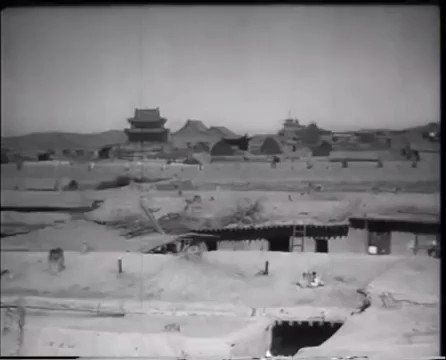
Among the photos, comments, and video clips is this one from Urumqi in 1928 (Sven Hedin trip there the meet governor), https://twitter.com/twitter/statuses/965842678238740480 | | twitter.com "Urumchi, the capital of Xinjiang in 1928. Clip from Sven Hedin's Expedition footage, Urumchi is their final destination and they are greeted by local governor Yang Zengxin. https://t.co/cqu1OSwrrk" |
from monthly newsletter from Asia Society: Nancy Rhodes, Language Education Consultant, Center for Applied Linguistics, presented to the Chinese Early Language Immersion Network ( CELIN) Leadership Forum on the lessons she learned through interviews with sixteen top immersion language specialists. Heather Singmaster shares these lessons, as well as examples from immersion programs across the country, in a new Global Learning blog post.
This call for authors to submit articles may be of interest to those keen on visual communication, but to those wishing to view examples, too, this article points to a place to see stories published to date:
Cross-Currents: East Asian History and Culture Review, a quarterly, open-access online journal, is accepting proposals for photo essays for the September 2016 and March 2017 issues (and beyond). Photo essays include: 1) 20-40 high-quality images with descriptive captions and complete source information, 2) a curator's statement, and 3) a longer non-peer reviewed essay (8-15 pages) contextualizing the photographs and highlighting their significance for current trends of inquiry in Asian studies. This essay can be written by the curator or by an invited scholar. To view archived Cross-Currents photo essays, please click here. The photographs should be taken in China, Korea, Japan, or Vietnam. They may be contemporary images taken as part of the curator's research or archival materials. Please consult the Cross-Currents mission statement to determine whether the proposed essay fits within the journal's historical and disciplinary scope. Obtaining copyright permissions for all images is the responsibility of the curator. Proposals should include: 5-10 sample images (as a single PDF); a one-page description of the theme of the essay and the timeliness/importance of the images to scholars of Asia; a brief bio paragraph about the curator; and complete contact information.
(1) ... release of Some Na Ceremonies<http://www.berkeleymedia.com/films/some_na_ceremonies>, a31-minute film I developed in collaboration with two Na filmmakers, Onci Archei and Ruheng Duoji. Also the founders of the Moso Folk Museum, they are from Luoshui Village next to Lugu Lake in southwest China, and we collaborated on a media training project and film festival in 2005-2006. Some Na Ceremonies is a rather unique film because it opens with a short excerpt from that film festival to frame that this is a living, contemporary place where people are actively engaged in and thinking about representations, then it moves to four ceremonies that map onto people's ideas of what would be more 'traditional.' These four ceremonies, all filmed and edited by Archei and Duoji over a period of several years, include chanting by Daba ritual specialists, funerary activities, ritualized dancing, and participation from family members and villagers involved in the ceremonies. You can get a sense of what they look like from this trailer, https://www.youtube.com/watch?v=YCbt2b7qx_w
The DVD is divided into five chapters (one for each ceremony) so that educators could either show the entire 31-minute film in class, or show one or more of the ceremonies as relevant. There is no droning narrative voice, a deliberate choice meant to give more immediacy to the sensory aspects of the ceremony and make viewers work to decipher what they are seeing. Each ceremony has a somewhat different approach to subtitled translation and explanatory text: one ceremony has both, one has only translation but no explanation, one has explanation but no translation, and the final ceremony is unmediated by explanation or translation. The result is that the film can provoke some very interesting reflection and discussion from students. A study guide is available as well to help guide that discussion and provide further background on Na communities [Tami Blumenfield at Furman College]
(2) There's another relatively new film, Mosuo Sisters, that offers a neat >perspective of two young women from a Yongning village. >http://itvs.org/films/mosuo-sisters Much of the rhetoric, again, is ....
another one 'Tisese: A Documentary on Three Mosuo Women' https://www.youtube.com/watch?v=WjqBAZfhuT0.
Digital image collections at Lafayette College's Skillman Library 730 High St, Easton, PA 18042 telephone (610) 330-5000 http://digital.lafayette.edu/collections/eastasia[<>] The Truku-Japanese War Commemorative Postcard CollectionThe Truku-Japanese War of 1914 was the culmination of Japan's 20-year campaign to disarm and assert sovereignty over Taiwan's Indigenous Peoples. This 100-postcard set provides an intimate photographic portrait of camp life, logistics, battles, terrain, and Japanese interactions with Taiwanese conscripts, allies, enemies, and objects of ethnographic interest. From May to August of 1914, the government deployed 3108 soldiers, 3127 police, and 4840 laborers (over 11,000 people) against a Truku population of roughly 10,000 people. The goal was to avenge previous uprisings and to finalize the conquest of the island colony. After burning several Truku villages, taking prisoners, confiscating rifles, and killing countless combatants, the Japanese declared victory on August 23, 1914. Mr. Fang Hsien-hui 方���� lent these items to the Puli Municipal Library for a November 2014 exhibition. The Library's Mr. Chen Yi-fang ��x方 arranged the transfer of digital images to the East Asia Image Collection, as well as providing invaluable advice. We also thank Dr. John Shufelt and Dr. Wang Peng-hui 王�i惠for their contributions to this project. [<>] Japanese Imperial House Postcard AlbumThis postcard album is titled "Haeyuru kōshitsu," which means "the Glorious Imperial House." It contains 78 picture postcards. The album appears to have been compiled in Japan just after the Shōwa Emperor's enthronement ceremonies in November, 1928. Photographs of the Meiji, Taishō and Shōwa emperors and empresses, artistic renderings of the various state Shintō ceremonies associated with Japanese kingship, the celebration of imperial matrimony, and the Crown Prince Hirohito's 1923 visit to Taiwan are the main themes. - See more at: http://digital.lafayette.edu/collections/eastasia#sthash.bJ5yr1cm.dpuf [<>] T.W. Ingersoll Co. Stereoviews of the Siege of Port ArthurThese one hundred images from the Russo-Japanese War are mostly set in Dalian, away from the battlefront. The lengthy descriptions on the backs, reproduced in the "description.text.english" field, display a strong pro-Japan bias. Russians are absent in the imagery and maligned in the text. Local Chinese purveyors of goods and services are featured as enterprising, eager, and well treated by the Japanese. Laudatory portraits of Japanese officers and Western war-correspondents are also prominent. Descriptions of major battles are found throughout the sub-collection. This complete set of stereoview cards was generously donated by Richard Mammana. [<>] Imperial PostcardsThe Imperial Postcard Collection consists of imagery from Japan and its colonies, wartime China, and selected areas of the wider imperialized world, from 1900 to 1945. "Manners and Customs" cards from Manchuria, North and Central China, Korea, Taiwan, Honshu, and Hokkaido are prominent. Also included are images associated with the Russo-Japanese War (1904-1905), the Manchurian Incident (1931) and the Second Sino-Japanese War (1937), as well as portraits of Japanese heroes, royalty and statesmen. 1,194 postcards, 18 envelopes and two trading cards. - See more at: http://digital.lafayette.edu/collections/eastasia#sthash.bJ5yr1cm.dpuf [<>] Tsubokura Russo-Japanese War Postcard AlbumThese 105 picture postcards were purchased as an album that appears to be correspondence "from the battleground " �榈丐瑜� by one Tsubokura Monnosuke 坪�}�y之助 to Tsubokura Jirō 坪�}二郎, both of whom resided in Yotsuya Ward, Tokyo. Monnosuke was enlisted in the Fifth Army's Third Assistant Porter Company 出征第五���獾谌��a助��a�. A majority of these cards are government-issue commemorative and soldier's consolation cards, while twenty-one of them are "pin-up girls." The 73 cards with legible postmarks were mailed between June 5, 1904 and April 15, 1906. A few of these cards were to and from other addressees and senders. [<>] Sino-Japanese War Postcard Album 1 and 2 <1>From the July 7, 1941, dedication: "This postcard album was published with war relief contributions....Thus, it is hoped that it will accompany troops and be used for mementos." These postcards are watercolors of scenes from China, painted by Mutō Yashū 武藤夜舟, Kojō Kōkan 古城江�Q, Seno Kakuzō ��野��i, Kobayakawa Atsushirō 小早川�V四郎, Kojima Matsunosuke 古�u松之助, Mikuni Hisashi 三��久, Mikami Tomoharu 三上智治 and others. There are 92 postcards in this album. <2> This album shares publication details with "Sino-Japanese War Postcard Album 01." Michael J. Stosic (1914-2010) presumably collected this album during his tour of combat, as a member of the 317th Troop Carrier Group, which was stationed variously in New Guinea, the Dutch East Indies, the Philippines, Okinawa, Korea, and Japan. The original owner was Satō Kichinoshin. 53 postcards, including images of Chinese Treaty Ports, Arawashi Japanese fighter planes, and other Chinese themes. [<>] Lin Chia-Feng Family PostcardsThe Lin Chia-feng (林佳��) Family Postcard Collection contains 370 colonial-era postcards (1900-1945) from Taiwan, Japan, Korea and China. Industry, tourism, colonial governance, monuments, festivals, and public works are prominent themes. Noteworthy sets include: "Famous Places of Niigata 新��名所", "Commemorative Postcards of the Yilan Waterworks 宜�m水道通水�念", "Japanese Police Inspection of Canton ��|��兵��书��g", "The Ancient Ruins of Gyeongju �c州古�E", "40 years of Colonial Rule in Taiwan Commemorative Exhibition 始政四十周年�念台湾博�E会", "Yamagata Aquarium 山形�h水族�^" and "Luodong Timber Industry �_�|�恿炙�." These postcards were lent to Lafayette College by Lin Shuchin and John Shufelt and were collected by Lin Chia-feng. [<>] Japanese History Study CardsThis set of 48 playing cards was designed to help children memorize phrases and terms related to "national history." They were published in October 1935, as Japan was putting itself on a wartime footing. The army was ratcheting up pressure on the Nationalist government of China by stationing troops ever deeper into areas south and west of the puppet state of Manchukuo, which had been under Japanese occupation since September 1931. The cards are thus all related to soldiering and martial values. It was published by the Jinseidō company in Kanda, Tokyo, and sold for 15 sen and promised to "make entrance examination preparation truly fun." These cards were generously donated to Skillman Library Special Collections by Richard Mammana. [<>] Pacific War PostcardsThe Pacific War Collection contains 36 postcards sent from Japanese civilians to surrendered Japanese soldiers in the Philippine Islands, Sumatra, and the South Seas. All of these postcards were processed by the Civilian Censorship Detachment (CCD) of the Supreme Commander of the Allied Powers (also known as SCAP). Each record contains a postcard and its contents (usually personal communications to family members), an English translation of the address, and the backs of the cards, which contain postal information and the CCD's censorship stamps. Identifiable postmarks range from August 19, 1945 to March 10, 1946. [<>] Michael Lewis Postcards517 colonial-era (1895-1945) postcards from Japanese governed Taiwan. Various postcard companies, genres, printing formats and time periods are represented. Noteworthy are several official commemorative sets 台湾�t督府始政�念 issued by the Taiwan Government General 台湾�t督府, and dozens of b/w cards published between 1900 and the 1920s. These older cards contain several thematic elements and represent postcard companies that drop out of the historical record by the mid 1930s. These postcards were lent to Lafayette College for scanning and publication by collector Michael Lewis. [<>] Gerald & Rella Warner PostcardsThese items were collected in Taiwan by Gerald and Rella Warner during Gerald's service as US Consul between August 26, 1937 and March 8, 1941. Warner Taiwan Postcards contains 201 postcards and 139 b/w commercial photographs from that period. Many of these images also appear in colonial-period albums such as Suzuki Hideo �木秀夫, ed., Taiwan bankai tenbō 台�侈�界展望. (Taipei: Riban no tomo, 1935) and Katsuyama Yoshisaku �偕郊�作, ed., Taiwan shōkai saishin shashinshū �_�辰B介最新写真集 (Taipei, 1931). Gift of Dallas Finn. [<>] Gerald & Rella Warner Dutch East Indies NegativesUS Consul to Taiwan Gerald Warner and his wife Rella created these 275 photographic negatives between June 11, 1938 and July 27, 1938. Most (257) were taken in the Dutch East Indies (Indonesia) during a vacation from consular duties in Taiwan. The remainder were taken in Hong Kong harbor (17) and Shantou (1). The following themes are most prominent: working conditions and equipment in ports and harbors, tourist attractions (including Borobudur, Balinese drama, and temple architecture), agricultural scenes, village life, and local markets. The captions for these images are taken from hand-written comments in the Warners' photo albums. Gift of the Estate of Gerald and Rella Warner. [<>] Gerald & Rella Warner Manchuria NegativesUS Vice Consul to Mukden (Shenyang) Gerald Warner created these 298 photographs between March 22, 1934 and August 2, 1935. Noteworthy are images of a parade for the 30th Anniversary of the Russo-Japanese War 日露�檎�, complete with floats, Japanese revelers in Russian costumes, and crowds celebrating victory. Pictures from Manzhouli �褐堇�, with its mixture of Russian, Manchu and Chinese architecture, are also prominent. The North Manchuria Railway, the Zhaoling 昭陵 and Fuling 福陵 Mausoleum complexes, Shisheng Temple, life in Shenyang's old and new quarters, and several other topics--from coal mines to military drills--are also depicted. Gift of the Estate of Gerald and Rella Warner. [<>] Gerald & Rella Warner Taiwan NegativesUS Consul to Taiwan Gerald Warner and his wife Rella created these 369 photographic negatives between August 26, 1937 and March 8, 1941. Depicted is the daily life of the dwindling and besieged Western community on the eve of the Pacific War. Just as prominent are urban and rural scenes of Japanese, Taiwanese, and expatriate life in Taiwan. The Warners' short trips to tourist destinations in Tainan 台南, Taroko Gorge タロコ峡, Sun Moon Lake 日月潭, Mount Kappan 角板山, and Orchid Island �t�^�Z (Lanyu) are also illustrated. Unposed photographs of the neighborhoods, festival life, and pastimes of the Japanese residents of Taipei are noteworthy. The captions for these images are taken from hand-written comments in the Warners' photo albums. Gift of the Estate of Gerald and Rella Warner. [<>] Gerald & Rella Warner Japan Slides567 color slides from the personal collection of US State Department official Gerald Warner and his wife Rella Warner. The great majority were produced between 1947 and 1951, during the US Occupation of Japan. Included are scenes of postwar reconstruction, urban and village life, military reviews, May Day parades, and portraits of formal and informal aspects of Japanese-Western diplomacy. Pictures of domestic life and scenery in Karuizawa �X井�g, Yokohama 横浜, Kobe 神�� and Tokyo, as well as photos of Yoshida Shigeru 吉田茂, Ikeda Hayato 池田勇人, Douglas MacArthur, Syngman Rhee, Lyndon Johnson, and Ural Johnson, are also included. Gift of the Estate of Gerald and Rella Warner. [<>] Gerald & Rella Warner Souvenirs of Beijing and TokyoThese sixty-one hand-colored b/w prints and lithographed postcards were collected by Gerald and Rella Warner during State Department postings in China (January 1932 to August 1935) and Japan (July 1948 to June 1950). Included are forty commercial photographs and twelve postcards of tourist sites in Beijing from the "Nanjing Decade" (1928-1937), when Beijing was also known as "Peiping." Also included are eight photos of landmarks in Tokyo during the period of U.S. Occupation (1945-1952). [<>] Woodsworth ImagesThese 25 prints and 18 postcards of colonial Taiwan were collected on-site by David Woodsworth (1918-2010) in the fall of 1940. Woodsworth's brother-in-law and host Donald Bews (1911-2008) was director of the McKay Memorial Hospital in Taipei from 1939 to 1941 and intimate of US Consul Gerald Warner (1907-1989). Prominent are images of Taiwan Indigenous Peoples, their artwork, architecture and natural environment. Also featured are pictures of the Sun Moon Lake resort area. Images scanned and used with the permission of Andrew Woodsworth. [<>] Scenic Taiwan Book'Taiwan no fūkō' (Scenic Taiwan) 台湾の�L光is one of many photo albums published in the 1930s that depict different areas of the Japanese Empire. This particular volume was published in Wakayama Prefecture in or after 1938, though it appeared in a less censored form in 1934. Its editor, one Yamazaki Kin'ichirō (or Kane'ichirō) (1897-1985), published several albums of Taiwan, Manchuria, and Hokkaidō photographs in this same decade. 'Scenic Taiwan' extols the good results of Japanese colonial rule, both in picture and in text. This digital version features the editor's translations of all captions, along with the original Japanese, providing a resource for studies in colonial architecture, discourse, and East Asian folkways. [<>] Taiwan Photographic Monthly Periodical- See more at: http://digital.lafayette.edu/collections/eastasia#sthash.RFSm3U5h.dpuf
The Good, Bad, and Ugly Dimensions of Chinese Education In his book, Who Is Afraid of the Big Bad Dragon? Why China Has the Best (and Worst) Education System in the World , Dr. Yong Zhao offers a fascinating tour of Chinese education and a nuanced analysis that reveals the secrets that make it both "the best and worst" in the world......
An expanded review of Who Is Afraid of the Big Bad Dragon? Why China Has the Best (and Worst) Education System in the World will be published soon in Frontiers of Education in China.
newsletter item announcing upcoming series to be released step by step: We are proud to curate this video series, Great LOL of China, with Jesse Appell, Beijing's funniest American comedian, in order to bring to light the diverse yet unique aspects of Chinese people and society. Think of these as conversation starters; they won't provide answers to all of your questions, but we hope they will pique your interest and lead to further inquiries and understanding about China, and all that it is reputed to represent. A new video will be released every other week. Enjoy and pass it on! For videos, behind the scene photos and related blogs, visit http://asiasociety.org/china-learning-initiatives/great-lol-china.
Visual context for worldview in 40 maps: These visual treats will prompt lots of thinking and talking. Share with others keen on understanding the world and its people.
The China photos (mostly around Urumqi, but also some from the silk road town of Turpan; also from up north: Altay prefecture)
These include shots of Chinese language signboard and announcements.
These also include pictures of Uyghur language, since this part of China is their homeland.
Searching for Photos of China's PastAn historian's project to locate and disseminate photographs from late 19th- and early 20th-century China is yielding uncommonly seen results, and they're freely available to the public for study. > Watch this BBC slideshow of carefully preserved images rarely seen in China; access the entire Historical Photographs of China library; and spend some time with the innovative and interactive Visualising China site.
http://www.cojak.org/ gives the Mandarin, Cantonese, Korean, Vietnamese, and Japanese, both onyomi and kunyumi, for nearly all characters according to today's electronic list for Korean Studies
Postcard Collection. The collection is part of our open-access digital archive called Lafayette College East Asia Image Collections. The Lin Collection consists of 370 Japanese postcards, mostly depicting scenes from 1930s Japan and Taiwan, but with some images of from Korea and China. http://digital.lafayette.edu/collections/eastasia
The Yangtze valley and beyond; an account of journeys in China, chiefly in the province of Sze Chuan and among the Man-tze of the Somo territory, by Mrs. J.F. Bishop (Isabella L. Bird, Bird, Isabella L. (Isabella Lucy), 1831-1904) New York, G.P. Putnam's; London, J. Murray, 1900 [c1899]
(Full text) on GoogleBooks
"e-Asia [est. 2001 - ed.] is a library of downloadable full text (currently over 4000 items -- primarily books -- are available.) Focus is on China, Japan, Taiwan, and Korea (South and North). While most items are in Western languages, there are many items in Chinese, Japanese, and Korean. e-Asia also offers audio, video, and special collections. The e-Asia project is funded by the University of Oregon Library through the generosity of Nissho Iwai. While the e-Asia project is based largely on resources held at the University of Oregon Library, its purpose is neither to duplicate nor displace printed traditonal materials. Rather, by providing searchable full text, the digitalization efforts of e-Asia represent a new tool aimed at facilitating the information-gathering process.
family [against the rich; for poor; communist agenda]two memoires by same author = first colors on the mountain
the sounds of the riverchinese lessons
Cost/Benefit Analysis: Three Gorges Dam Within the next seven years, life along the Yangtze River in China will change. Millions of people will be displaced. Ancient artifacts will disappear and the environment will be altered forever. At the same time, however the Chinese will increase their capacity to produce electrical power in the area, and they will gain new ability to control damaging floods. Also, some say air quality will be improved with the increased use of electrical power. Is this new project an appropriate one for the Chinese to undertake? What are the costs and benefits of this new dam and who is affected by the decision made? To view the Lesson Plan, visit www.econedlink.org/lessons/index.cfm?lesson=EM347
=-=-= Several professors, students, and others have teamed up to produce The China Beat blog at http://thechinabeat.blogspot.com =-=-= The Chinese American Cultural Bridge Center, an Illinois-based nonprofit organization, has developed a tour especially designed for educators. This tour is designed to provide educators with the opportunity to meet, and exchange ideas about education and culture with Chinese educators, as well as experience the geography, history, culture, economics, government and technology of China firsthand. In addition, each educator will be provided with background information and instructional materials, to assist in bringing China alive in the classroom.
On this unforgettable 15-day journey, educators will travel to Beijing, Zhengzhou, Kaifeng, Luoyang, Shaolin Temple, Xian, and Shanghai. They will explore the tomb of China's first Emperor who unified China, with its amazing army of life-size, terra-cotta soldiers; walk along the Great Wall; marvel at Beijing's Forbidden City; speculate at Luoyang's Longmen Grottos; and experience the Ancient Song Dynasty life in Kaifeng. The journey will conclude in the vibrant Shanghai.
...15-day =$3,800 price includes International airfare from your location, 4 star hotels, all meals, transportation, guide, and sightseeing...June 16 – June 30, 2009.
On raw corruption, pp. 230-4. Extended introduction to Chinese language features and functions, pp. 236-9. Other margin notes, http://big1file.googlepages.com/nb-chinaroadSelected bibliographyPearl Buck [1931]. The Good Earth. John Pomfret. 2006. Chinese Lessons: Five classmates and the story of the new China. Wei-ming Tu, ed. 1991. The Living Tree: The changing meaning of being Chinese today. John Flowers' detailed website one Sichuan village's life, http://xiakou.unc.eduMoral Landscape in a Sichuan Mountain Village - a digital ethnography of place
http://www.npr.org/templates/story/story.php?storyId=17110447&sc=emaf radio story includes 1930s recording of Nanjing invasion 13 December 1937.
[aired 13 Dec 2007, NPR.org "Morning Edition"]
With millions of students who want an American-style education (or an American diploma), China is a very attractive market for American colleges and universities that want to offer full degree programs abroad. Some institutions have been there for a long time — Johns Hopkins University and Nanjing University this year marked the 20th anniversary of their joint degrees in international relations. New programs keep being announced. The State University of New York at Stony Brook announced a program this year. Kaplan Inc., the for-profit higher education company, announced a major expansion of its China campuses just last week. That's the issue raised by a controversial report released in Britain Thursday that questions the rush by academics to China. Much of the thinking by academics in Britain about the changes in China and how they affect the international higher education market has been "alarmingly woolly," says the report, "British Universities in China: The Reality Beyond the Rhetoric." The report's introduction notes that "reportedly one UK vice chancellor or pro vice chancellor a week has been landing in Beijing or Shanghai to explore future partnership opportunities. Yet there is no overarching strategy about what UK higher education should be trying to achieve." Authors of the report — by the think tank Agora — said that the comments applied equally well to the American institutions whose presidents and provosts are flocking to China in droves as well... full story, http://www.insidehighered.com/news/2007/12/07/china
http://www.unhappymedium.com/ [Elizabeth Little] Special affection for Chinese examples.
| |